

When people hear “acne,” they usually think about the face. But acne doesn’t stop there. It can appear on the back, chest, shoulders, arms, and even buttocks, and for many people, body acne is even more stubborn than facial breakouts.
At Acneexpertskin, we see this concern often, and one thing is clear: body acne is not just a hygiene issue. It is a skin condition influenced by sweat, hormones, friction, clogged pores, and sometimes lifestyle habits.
Understanding what causes it is the first step to finally getting it under control.
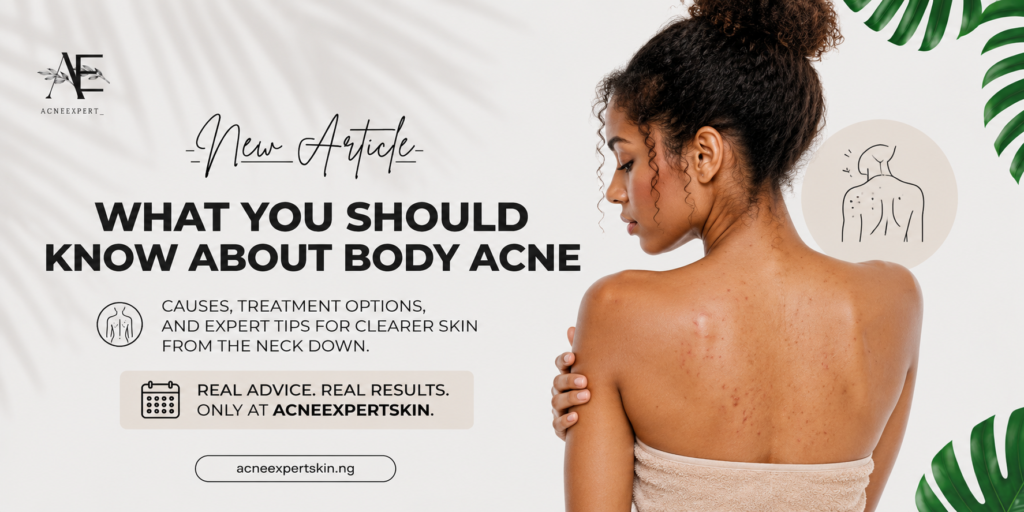
What Is Body Acne?
Body acne refers to breakouts that occur on areas other than the face, most commonly:
- Back
- Chest
- Shoulders
- Upper arms
- Buttocks
These breakouts can appear as:
- Blackheads
- Whiteheads
- Small bumps
- Painful cysts
- Pustules (pus-filled pimples)
Just like facial acne, body acne develops when pores become clogged with oil, dead skin cells, and bacteria.
What Causes Body Acne?
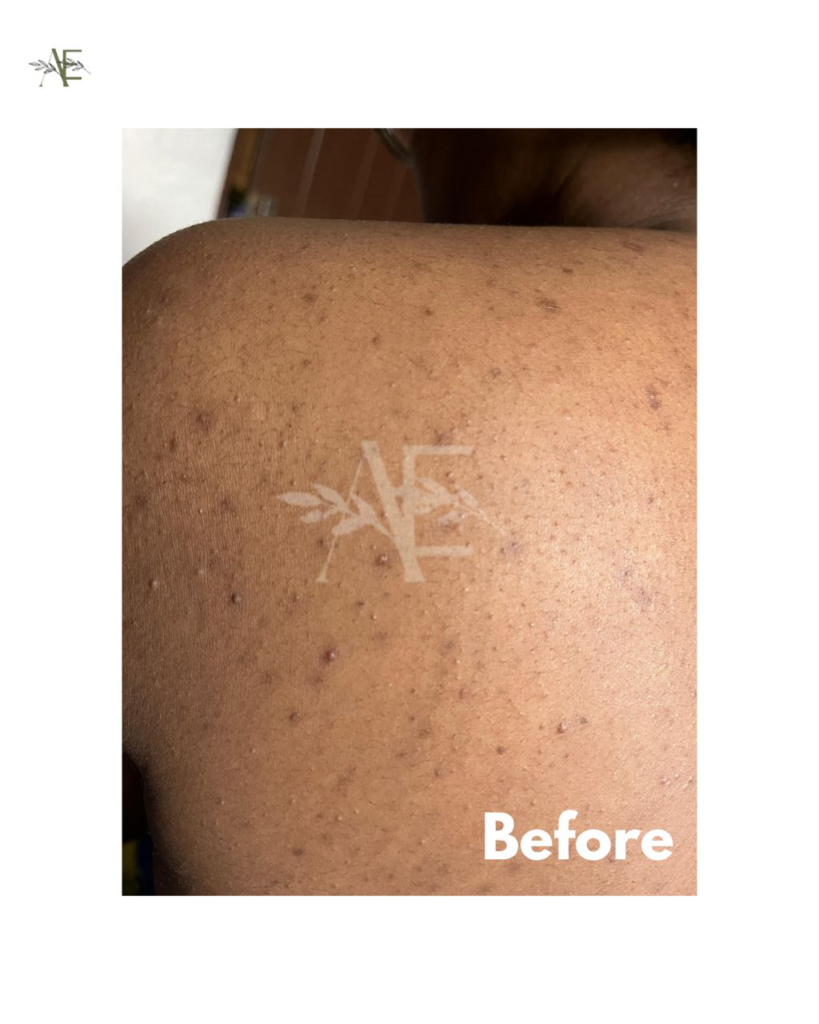
Body acne usually has multiple triggers working together.
1. Excess Sweat and Heat
When sweat mixes with oil and bacteria, it can clog pores, especially if the sweat sits on the skin for too long after workouts or hot weather exposure.
2. Tight or Non-Breathable Clothing
Clothing that traps heat and friction (like tight gym wear or synthetic fabrics) can irritate the skin and worsen breakouts.
3. Hormonal Imbalances
Hormones play a major role in oil production. Conditions like hormonal imbalance can trigger acne on both face and body.
4. Poor Post-Workout Habits
Staying in sweaty clothes after exercise creates a perfect environment for bacteria to thrive.
5. Hair and Skin Products
Oily conditioners, body creams, and hair products can clog pores when they run down the back or shoulders.
6. Dead Skin Cell Build-Up
If the skin is not exfoliated properly, dead skin accumulates and blocks pores.
7. Stress
Stress increases cortisol levels, which can indirectly increase oil production and breakouts.
How Body Acne Differs From Facial Acne
Body acne tends to be:
- More spread out
- Deeper and more inflamed
- Slower to heal
- More prone to scarring and dark spots
This is because the skin on the back and chest is thicker and has larger sebaceous (oil) glands.
Common Mistakes People Make
Many people unintentionally make body acne worse by:
- Scrubbing too hard (this irritates the skin)
- Using harsh soaps that strip the skin barrier
- Ignoring post-workout cleansing
- Popping or picking body pimples
- Not treating it consistently
More aggression doesn’t equal better results, consistency and the right approach matter more.
How to Treat and Manage Body Acne
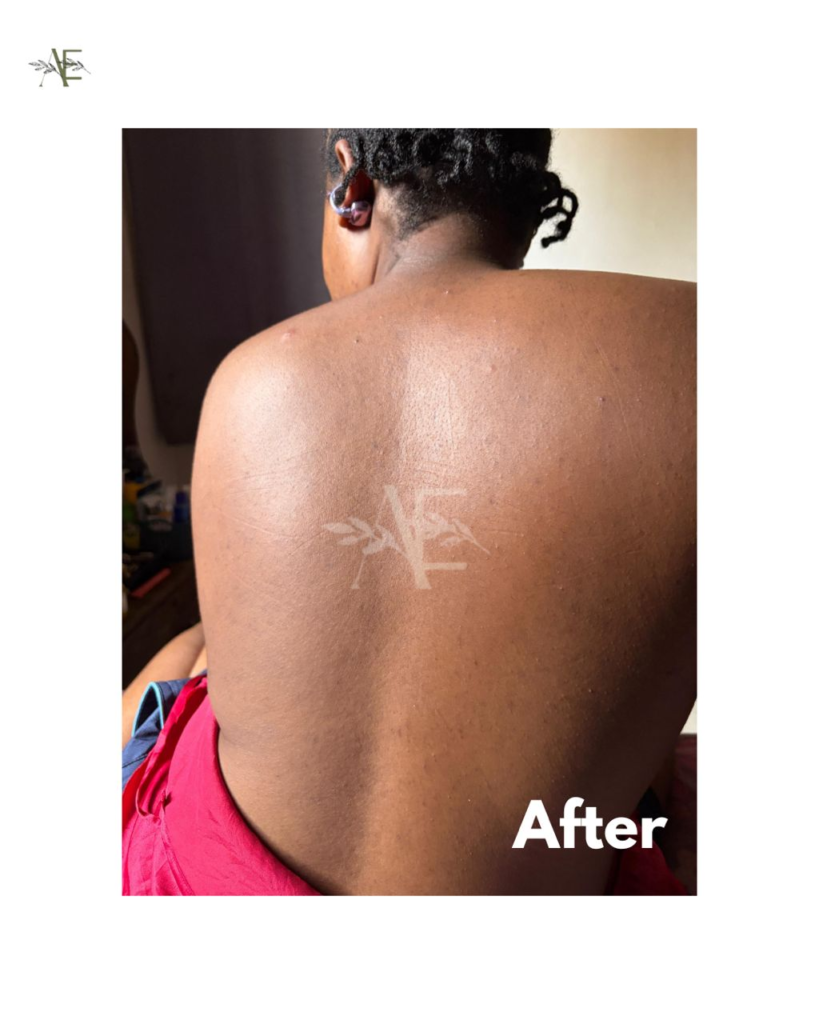
1. Shower After Sweating
Always cleanse the skin as soon as possible after workouts or heavy sweating.
2. Use Gentle, Acne-Focused Cleansers
Look for ingredients like:
- Salicylic acid
- Benzoyl peroxide
- Niacinamide
These help unclog pores and reduce inflammation.
3. Wear Breathable Clothing
Cotton and moisture-wicking fabrics reduce friction and heat buildup.
4. Exfoliate Regularly (But Gently)
Chemical exfoliation is often better than harsh scrubs.
5. Keep Hair Products Off Your Back
Rinse conditioner properly and avoid letting oily products run down your body.
6. Moisturize Properly
Even acne-prone skin needs hydration. Choose non-comedogenic moisturizers.
7. Seek Professional Treatment
Persistent body acne may require:
- Prescription treatments
- Chemical peels
- Customized skincare routines
- Professional extractions
Can Body Acne Leave Scars?
Yes. Body acne often leads to:
- Dark spots (post-inflammatory hyperpigmentation)
- Raised scars
- Uneven skin texture
This is why early treatment is very important. The longer inflammation stays active, the higher the chance of scarring.
How Long Does It Take to Clear Body Acne?
This depends on severity and consistency of treatment. Most people see:
- Mild improvement: 2–4 weeks
- Moderate improvement: 6–12 weeks
- Severe cases: 3–6 months or more
Consistency is key — not quick fixes.
Frequently Asked Questions (FAQs)
1. Is body acne caused by poor hygiene?
Not necessarily. While hygiene plays a role, body acne is often caused by hormones, sweat, friction, and clogged pores — not simply being “unclean.”
2. Why do I get acne on my back but not my face?
The back has more oil glands and is harder to keep clean due to clothing coverage and sweat buildup.
3. Can body acne go away on its own?
Mild cases may improve, but most body acne requires proper treatment to fully clear and prevent recurrence.
4. Does diet affect body acne?
Yes. High-sugar and high-dairy diets may worsen acne in some individuals.
5. Can gym workouts cause body acne?
Not directly — but sweat, tight clothing, and not showering afterward can trigger breakouts.
6. What is the fastest way to treat body acne?
A consistent routine using acne-fighting cleansers, proper hygiene after sweating, and avoiding pore-clogging products.
7. Can body acne scars be treated?
Yes. Treatments like chemical peels, microneedling, and dark spots targeted treatment can improve scars and dark spots over time.
8. Should I pop body pimples?
No. Popping increases inflammation, spreads bacteria, and increases the risk of scarring.
Final Thoughts
Body acne is frustrating, but it is absolutely manageable when you understand what’s triggering it and treat it the right way.
It’s not about doing more, it’s about doing the right things consistently.
At Acneexpertskin, our goal is to help you not only treat acne but understand your skin deeply enough to prevent future breakouts.
Clear skin is possible, and it starts with the right knowledge.


