

You know that feeling…
You finally get your skin under control, and then suddenly, the same kind of breakout shows up again.
Same area.
Same time of the month.
Same annoying cycle.
So you change your cleanser. Try another serum. Cut out a food. Buy another acne treatment.
And then it happens again.
Sometimes, recurring acne really is about your skincare routine. But sometimes, your skin may be responding to changes happening elsewhere in your body.
Hormonal changes can influence acne, and conditions such as polyendocrine metabolic ovarian syndrome (PMOS), formerly called PCOS, can be associated with acne alongside other symptoms.
That doesn’t mean every breakout is hormonal or that having acne means you have PMOS.
It simply means that when your acne keeps coming back, it may be worth paying attention to the pattern.
Here are 5 things to watch.
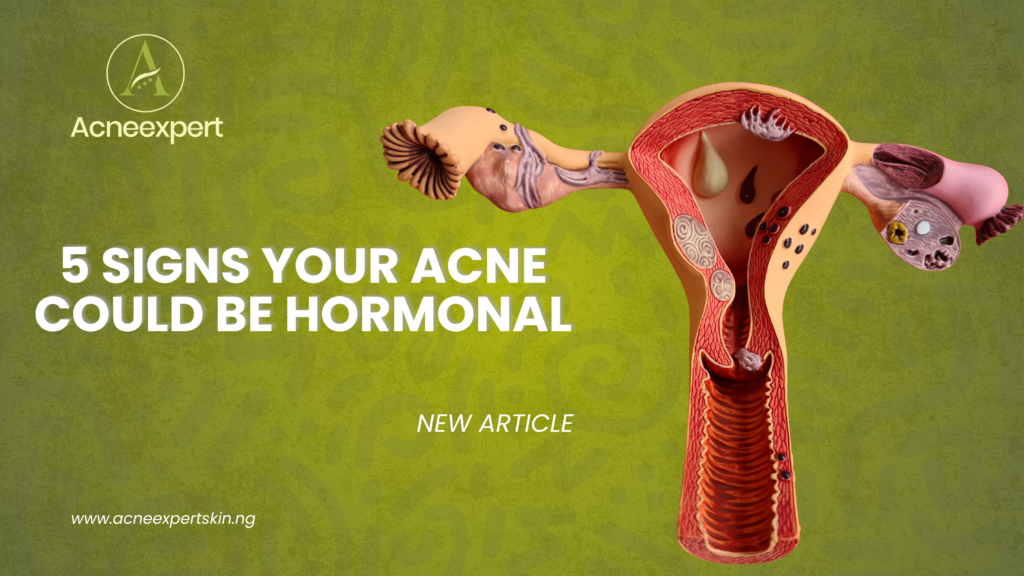
1. Your Acne Keeps Coming Back, Especially Around Your Lower Face
Not every breakout is hormonal.
But if you’re dealing with persistent or recurring acne, particularly around areas like the jawline, chin or lower face, it can be worth looking at what else is happening around the same time.
Ask yourself:
- Does it tend to appear around the same point in your cycle?
- Does it keep returning even when your skincare routine is consistent?
- Are you noticing other changes in your body at the same time?
The goal isn’t to diagnose yourself from your mirror.
It’s to notice patterns instead of automatically blaming your skincare products.
2. Your Periods Are Unpredictable
Your period can occasionally arrive early or late.
Stress, weight changes, certain medications and other factors can affect your menstrual cycle too.
But if your periods are consistently irregular, very infrequent or frequently missed, that’s something worth discussing with a healthcare professional.
Irregular periods are one of the symptoms associated with PMOS, but they can also have several other causes.
So instead of simply saying,
“My period is just doing its thing.”
Start keeping track.
When did it start?
How long did it last?
How far apart were your cycles?
Your period tracker can actually become useful information when you’re trying to understand what’s happening with your body.
3. You’re Suddenly Noticing More Facial or Body Hair
Have you noticed new, thicker or darker hair appearing on your chin, upper lip, chest or other areas where you didn’t previously have much hair?
That can be called hirsutism, and changes in androgen levels can contribute to it.
Excess facial or body hair can occur with PMOS, especially when it appears alongside symptoms such as irregular periods or acne.
Again, one symptom doesn’t automatically mean PMOS.
But if you’ve noticed several changes happening together, that’s when it’s worth having a proper conversation with a healthcare professional.
4. Your Hair Is Thinning
We’re usually very quick to notice when new hair appears where we don’t want it.
But sometimes, the opposite happens.
You may notice that your scalp hair is becoming thinner, your part looks wider, or you’re experiencing more hair loss than usual.
Scalp hair thinning or hair loss can also occur among the symptoms associated with PMOS.
And when you’re experiencing acne + changes in your period + changes in hair growth, that’s a pattern worth paying attention to.
Not panicking over.
Paying attention to.
5. Your Weight or Metabolism Seems to Be Changing
Another symptom sometimes associated with PMOS is weight gain or difficulty losing weight.
But let’s be careful here.
Weight alone cannot tell you whether you have PMOS.
People can experience weight changes for many reasons, and people with PMOS don’t all have the same body type or symptoms.
The bigger picture matters.
If changes in weight are happening alongside irregular periods, acne, excess facial/body hair or scalp hair thinning, that’s useful information to bring up with a healthcare professional.
So… Does Having These Symptoms Mean You Have PMOS?
No.
And this is important.
Having acne doesn’t mean you have PMOS.
Having irregular periods doesn’t automatically mean you have PMOS either.
Even having several of these symptoms doesn’t mean you should diagnose yourself.
PMOS can look different from person to person, and healthcare professionals use your symptoms, medical history and, when appropriate, examinations and tests to work out what’s actually going on. There isn’t one single test that tells everyone whether they have PMOS.
So if you’re noticing recurring acne alongside changes in your periods, hair growth, scalp hair or weight, don’t just keep buying another acne product and hoping the next one will solve everything.
Start tracking the pattern.
And talk to a qualified healthcare professional who can help you understand what those changes may mean.
Your Skin Doesn’t Exist in Isolation
This is something we want you to remember at Acneexpertskin:
Your skincare routine matters, but your skin doesn’t exist in isolation.
Sleep matters.
Nutrition matters.
Movement matters.
Stress management matters.
Your menstrual cycle matters.
And paying attention to changes in your body matters too.
You don’t need to become obsessed with every little change.
You simply need to become more aware.
Instead of:
“I have acne. What new product should I buy?”
Sometimes the better question is:
“What has been happening with my skin and my body lately?”
That’s a very different conversation.
Build Supportive Habits Too
While you’re paying attention to your skin, don’t forget to create simple habits that support your overall wellbeing.
Get enough rest when you can.
Eat balanced meals.
Stay active.
Find ways to manage stress.
Keep your skincare routine simple and consistent.
And create little wellness rituals that make taking care of yourself feel enjoyable rather than like another chore.
One of ours? Spearmint Tea. 🌿
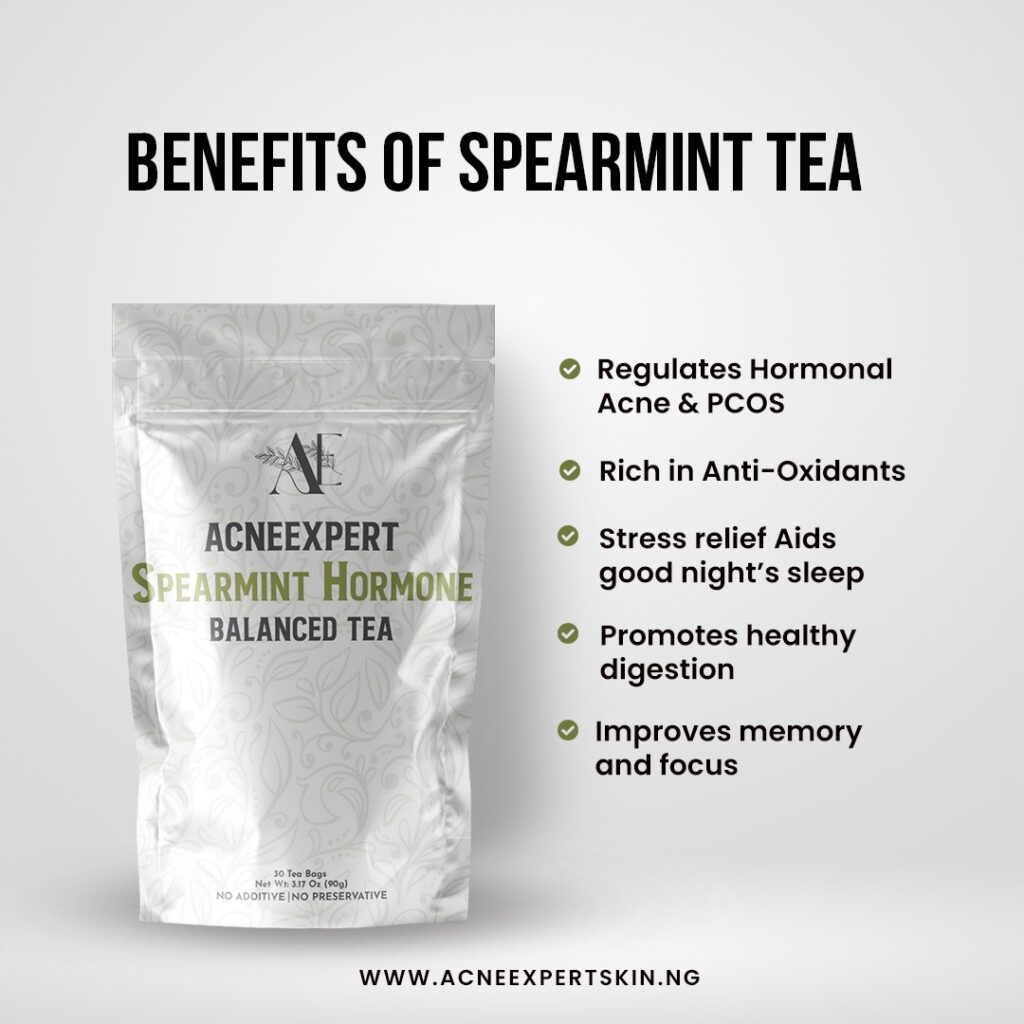
Acneexpertskin Spearmint Tea can be a simple addition to your everyday routine… a warm cup while you’re winding down, studying, starting your morning or simply taking a few minutes for yourself.
We’re not positioning it as a treatment for PMOS or hormonal acne.
Because no single cup of tea should be marketed as a replacement for proper medical care.
Instead, think of it as part of the bigger picture:
small, consistent wellness habits that encourage you to be more intentional about taking care of yourself.
Your skincare routine is one part of that.
Your overall wellbeing is another.
Don’t Just Treat the Breakout. Notice the Pattern.
Your skin can sometimes be the first thing that gets your attention.
Don’t ignore it.
But don’t let it scare you either.
If your acne keeps returning, start looking beyond the pimple.
Track your breakouts.
Track your periods.
Pay attention to changes in your hair and body.
And if something doesn’t feel right, talk to a healthcare professional instead of trying to diagnose yourself online.
Because sometimes, the most helpful thing you can do for your skin isn’t finding another product.
It’s paying attention to the pattern. 🤎
This September, we’re talking about PMOS, skin and the importance of understanding your body… one conversation at a time.


