

You wash your face, apply your favourite serum, reach for your moisturiser… and suddenly, your skin starts stinging.
Your first thought might be that the product is working. Maybe your skin is adjusting. Perhaps you just need to give it a few more days.
But what if your skin is actually asking you to slow down?
A little discomfort is not a skincare milestone. If your products regularly leave your face burning, unusually tight, red or uncomfortable, it’s worth paying attention.

Meet Your Skin Barrier
Think of your skin barrier as your skin’s protective outer layer. It helps keep moisture in while protecting your skin from irritants and other environmental factors.
When that barrier is functioning well, your skin can generally retain moisture and tolerate everyday exposure more effectively.
When it’s disrupted, however, your skin may become dry, flaky, sensitive or more easily irritated.
And here’s where your skincare routine comes in.
How Your Routine Could Be Contributing
Sometimes, the problem isn’t that you aren’t doing enough skincare. It may be that you’re doing too much.
Frequent exfoliation, harsh cleansing, combining several active ingredients or introducing multiple new products at once can irritate the skin.
Even products designed to help with acne or dark spots may be unsuitable when your skin is already irritated.
Take cleansers, for example. Acne-focused ingredients such as salicylic acid and mandelic acid can be useful for suitable skin, but they may increase discomfort for some people, especially when the skin barrier is already compromised.
This doesn’t mean every active ingredient is bad. It means your skin’s current condition matters just as much as the product you’re using.

What Should You Do If Your Skin Starts Stinging?
First, don’t respond by buying three more products.
Instead, take a closer look at your routine.
Simplify where you can. Pause non-essential products that seem to be causing irritation, especially exfoliants and strong active ingredients.
Choose gentle basics. Use a cleanser your skin tolerates, a suitable fragrance-free moisturiser and daytime sun protection that doesn’t worsen your discomfort.
Pay attention to patterns. Did the stinging begin after introducing a new serum? Does it happen every time you wash your face? Keeping track of these details can help you identify possible triggers.
Don’t ignore persistent symptoms. If the discomfort continues, your skin develops a persistent rash or the irritation keeps returning, consult a qualified healthcare professional or dermatologist.
Seek prompt medical attention for severe pain, blistering, significant swelling or signs of infection.
One important thing to remember: stinging can have different causes. It doesn’t automatically mean your skin barrier is damaged, and it cannot tell you on its own whether you have dermatitis.
Where Acneexpertskin Fits In
At Acneexpertskin, we want you to understand your skin rather than feel pressured to keep adding products to your shelf.
Our Teen Acne Control Cleanser contains mandelic acid and salicylic acid and is intended for acne-focused skincare.
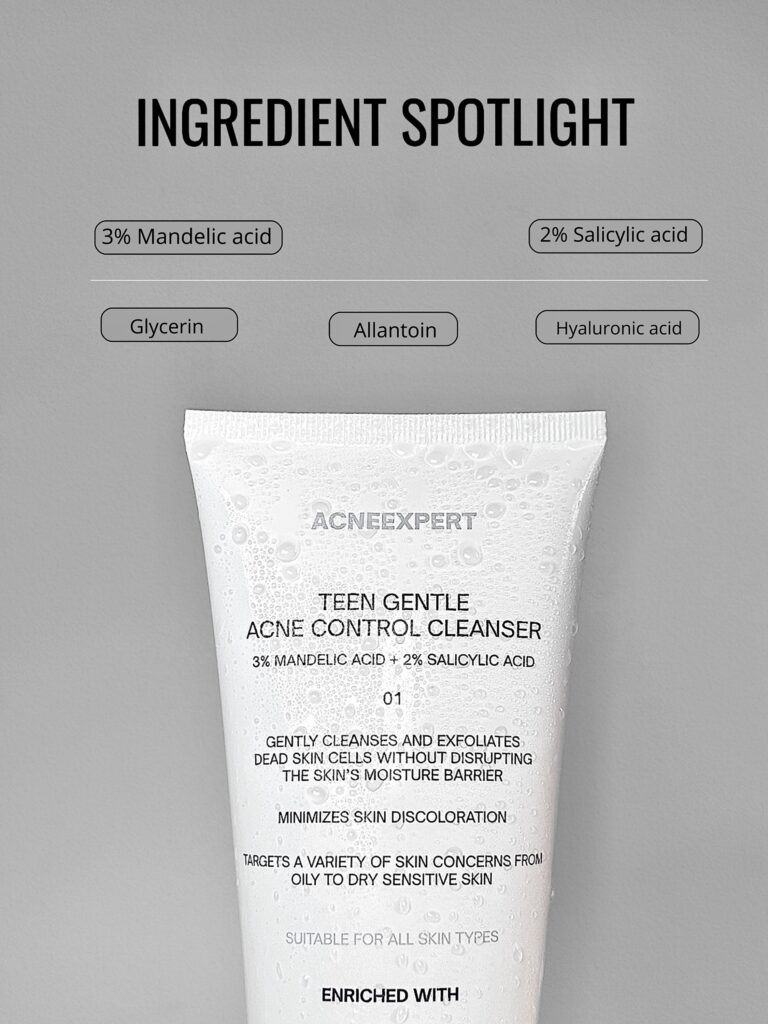
However, if your skin is currently burning, inflamed or unusually sensitive, don’t assume an acne cleanser is the right next step.
Treating a concern effectively starts with understanding the condition of your skin.
Sometimes, the most helpful change is not adding another active ingredient.
It’s recognising when your skin needs a gentler approach.
Your skin doesn’t have to sting for your skincare routine to be working.
If irritation keeps returning, get the right guidance before experimenting with another product.
Your skin deserves care that makes sense for what it’s experiencing right now.