

Dear Glowgetter,
You changed your cleanser.
Then you changed your diet.
Then someone recommended a new supplement.
Then TikTok convinced you that your acne was definitely a “hormonal imbalance.”
And somehow, you’re now standing in front of a shelf full of skincare products wondering why your skin still hasn’t got the memo.
But here’s the thing…
What if your skin isn’t the only thing you should be paying attention to?
Sometimes, the more useful question isn’t “What product will get rid of this?”
It’s:
“What else has been happening with my body?”
That question is particularly important during PMOS Awareness Month.
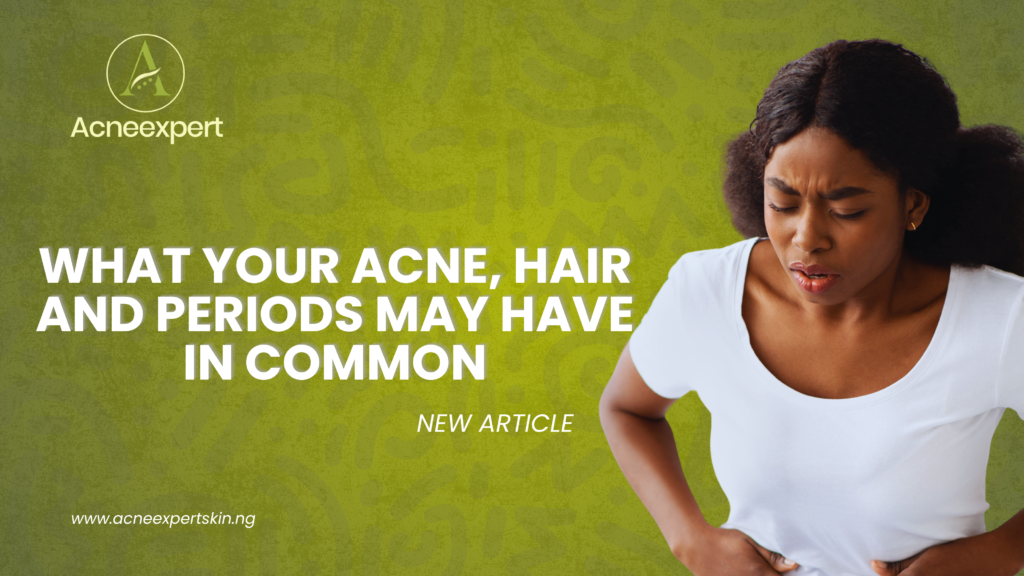
Your Skin Doesn’t Know It’s Supposed to Keep Secrets
Your skin is one of the places where hormonal changes can become visible.
For someone experiencing PMOS, that might mean dealing with acne that keeps returning, particularly when other symptoms are happening at the same time.
But PMOS doesn’t stop at acne.
You might also notice changes in your menstrual cycle, increased facial or body hair, scalp hair thinning, changes in weight, or areas of darker skin.
And suddenly, that breakout you’ve been obsessing over becomes just one piece of a much bigger picture.
That’s why we’re talking about PMOS through a skin conversation this month.
Not to tell you that every breakout means something is wrong.
But to encourage you to notice the patterns.
Let’s Start With Your Period
Imagine opening your period tracker and scrolling back.
You expected your cycle around the 5th.
Nothing.
Then the 15th comes.
Still nothing.
Eventually, it arrives… but the next month is unpredictable again.
If this happens repeatedly, it’s worth paying attention to.
Irregular, infrequent or missed periods can be associated with PMOS because the condition can affect ovulation.
But they can also happen for plenty of other reasons.
So the takeaway isn’t:
“Irregular period = PMOS.”
It’s:
“My cycle has changed. I should understand why.”
That’s a much healthier way to approach your body.
Then There’s the Hair Situation
Here’s where things can get confusing.
You might notice more hair appearing around your chin, upper lip, chest or other areas.
At the same time, you might notice less hair on your scalp.
These changes can sometimes occur alongside PMOS because of hormonal changes, particularly changes involving androgen hormones.
And when they’re happening alongside irregular periods and recurring acne?
That’s information worth sharing with a healthcare professional.
Not because you’ve diagnosed yourself.
Because you’ve noticed a pattern.
And Yes… Your Skin Can Be Part of It
Acne is one of the symptoms that can occur with PMOS.
Hormonal changes can influence oil production and contribute to breakouts.
But this is where skincare conversations online can get messy.
Someone sees a few breakouts and immediately says:
“That’s PMOS.”
No.
Acne has many possible causes.
You don’t get a PMOS diagnosis because you woke up with three pimples on your chin.
And you definitely shouldn’t start taking random supplements because somebody on social media told you your hormones are “off.”
Your skin can give you a reason to ask questions.
It cannot give you the diagnosis by itself.
The Part We Don’t Talk About Enough: The Combination
This is where things get interesting.
One symptom on its own may not tell you much.
But imagine you’re experiencing:
Recurring acne.
Irregular periods.
More facial hair than usual.
Scalp hair thinning.
Changes in your weight.
Now you’re not simply looking at a stubborn breakout.
You’re looking at a collection of changes happening around the same time.
That doesn’t automatically mean PMOS either.
Other health conditions can cause similar symptoms.
But it does give you a reason to stop guessing and have a proper conversation with a healthcare professional.
Because sometimes, the most important skincare habit is simply:
Pay attention.
Please Don’t Let TikTok Diagnose You 😭
There is a very specific internet pipeline:
You get one pimple.
→ Search “hormonal acne.”
→ Watch six videos.
→ Learn about PMOS.
→ Order three supplements.
→ Decide you’ve figured out your hormones.
→ Panic.
Please, let’s skip that part.
PMOS diagnosis involves looking at the whole picture and considering other possible causes of similar symptoms.
So if you’re concerned, write down what you’ve actually noticed.
When did your periods become irregular?
How often are you breaking out?
Have you noticed new facial hair?
Is your scalp hair changing?
Have there been other changes in your body?
That information is far more useful than trying to diagnose yourself from a 30-second video.
But What About Supplements?
This is another area where awareness matters.
Because once people hear the words hormones and PMOS, the supplement recommendations start flying.
One person recommends this.
Another recommends that.
Suddenly you’re taking six things before breakfast.
More supplements doesn’t automatically mean better health.
Supplements can have a place in someone’s routine, but they should be approached thoughtfully. They shouldn’t replace proper medical evaluation or prescribed treatment.
Before adding something new, ask:
Why am I taking it?
What am I expecting it to do?
Is it appropriate for me?
Could it interact with something I’m already taking?
Sometimes, supporting your wellbeing starts with much less dramatic things… eating regularly, getting enough rest, moving your body, managing stress and creating routines you can actually maintain.
And This Is Where Our Spearmint Tea Comes In 🌿
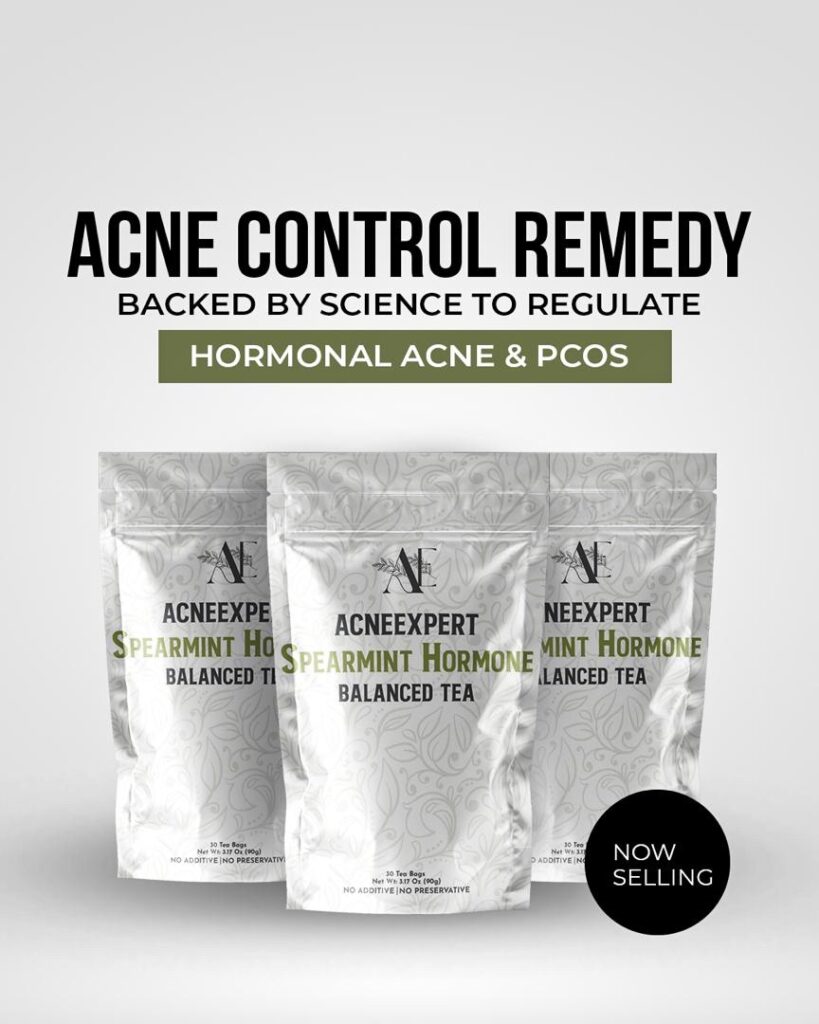
Not as a miracle.
Not as a “hormone-balancing hack.”
And definitely not as a replacement for seeing a doctor.
As a ritual.
A warm cup of Spearmint Tea can become one of those small moments in your day when you intentionally slow down.
Maybe it’s your morning cup before the day gets busy.
Maybe it’s beside you while you’re studying.
Maybe it’s part of your evening wind-down.
There’s something valuable about having a simple wellness habit you actually enjoy enough to keep doing.
And that’s really the message behind our Spearmint Tea this month:
Wellness doesn’t always have to be complicated.
Small habits count too.
Your Skin Is Not Separate From You
We often treat skincare like there’s a wall between your face and everything else happening in your life.
Acne goes in the “skincare problem” box.
Irregular periods go in another box.
Stress goes somewhere else.
Sleep? Another box.
But your body doesn’t work in separate little compartments.
Everything is connected in much more complicated ways than a skincare routine can address on its own.
That’s why we’re not telling you to panic over every breakout.
We’re telling you to become more observant.
Notice what’s normal for you.
Notice when something changes.
Notice when several changes appear together.
And when you’re concerned, get professional advice rather than trying to solve the mystery alone.
This PMOS Awareness Month…
Don’t just ask:
“How do I get rid of this acne?”
Also ask:
“What is my body trying to tell me?”
You might not have the answer immediately.
And that’s okay.
You don’t need to.
You just need to start paying attention. 🤎


