

First, why do acne dark spots happen?
That dark mark left behind after a breakout is often called post-inflammatory hyperpigmentation (PIH).
When acne causes inflammation, your skin can respond by producing more pigment around the affected area. Once the breakout heals, the inflammation may be gone while the extra pigment remains.
This is particularly common in darker skin tones, which is why you may notice that the pimple disappears but the mark sticks around for much longer.
And that’s where the frustration begins.
You aren’t necessarily dealing with more acne.
You’re dealing with what the acne left behind.

1. Picking and squeezing your pimples
Let’s start with the obvious one.
Stop picking that pimple.
We know it’s tempting.
It’s raised.
It’s annoying.
It’s right there.
And you have convinced yourself that if you squeeze it just once, it’ll be gone.
But picking or squeezing can increase inflammation and damage the skin around the breakout. And when your skin is already prone to leaving dark marks after inflammation, more trauma is not exactly what you want.
Instead of:
Breakout → heals → fades
you can end up with:
Breakout → squeezed → irritated → dark mark → frustration.
Sometimes the most helpful thing you can do for an active breakout is simply leave it alone.
2. Scrubbing your skin to get rid of the mark
A dark spot isn’t dirt.
You can’t scrub it off.
But when you want results quickly, it’s easy to reach for an exfoliating scrub and think:
“Maybe if I just exfoliate a little more…”
Then a little more becomes every day.
And suddenly your skin feels tight, dry or irritated.
Your skin needs care, not punishment.
Physical scrubbing can irritate acne-prone skin, and irritation isn’t something you want to introduce when you’re already trying to manage pigmentation.
A dark mark doesn’t need more friction. It needs the right kind of care and time.
3. Using every “brightening” product you see
This is where skincare gets expensive.
You see someone recommend a brightening serum.
You buy it.
Then someone says you should add an exfoliating acid.
You add that too.
Then there’s a viral product that’s supposedly going to transform your skin in seven days.
Now you’re layering everything together and wondering why your skin suddenly feels completely different.
Here’s your reminder:
Your skincare routine is not a competition.
You don’t get bonus points for using more products.
Introducing too many products at once can make it difficult to know what’s actually working. Worse, some combinations can leave your skin irritated.
If you’re trying to fade dark spots, your goal should be consistent care, not constantly changing your routine.
4. Treating the dark spots while ignoring the acne
This one is easy to miss.
You are focused on fading the marks you already have…
but you’re still experiencing regular breakouts.
So just as one dark spot begins to fade, another pimple appears.
Then another.
And another mark joins the collection.
Now you’re constantly treating the aftermath.
A better approach is to think about both sides of the problem:
Manage the acne.
Care for the dark marks.
That’s why a consistent acne-focused routine matters.
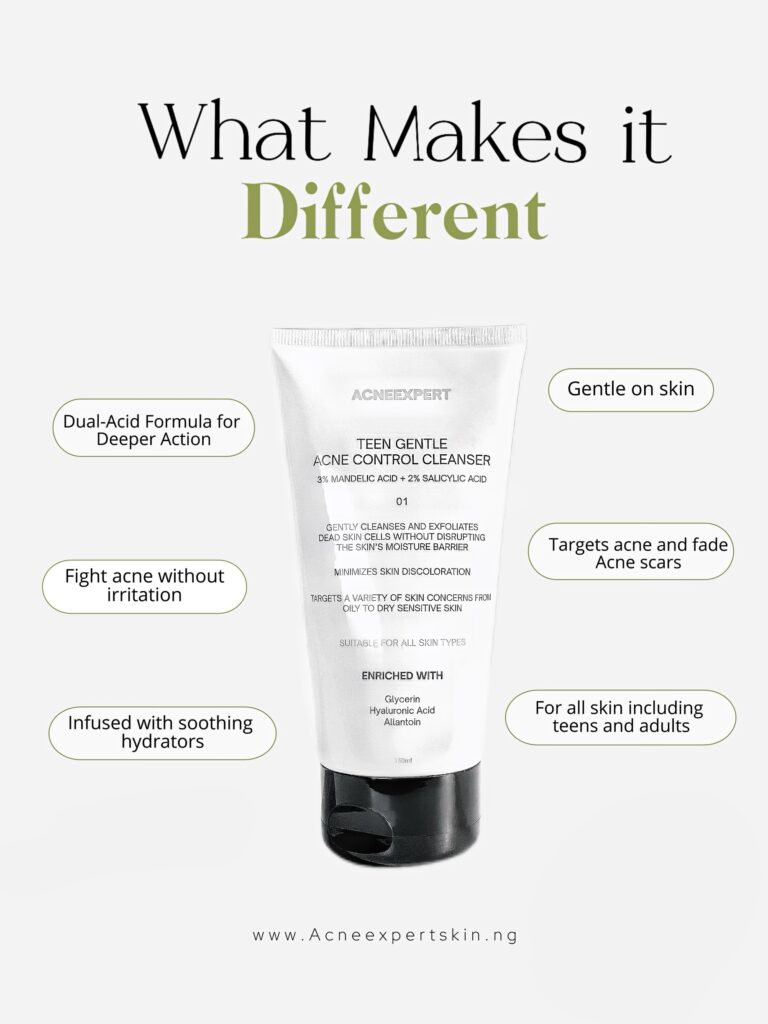
The Acneexpertskin Teen Control Cleanser, formulated with mandelic acid and salicylic acid, can be part of a routine designed for acne-prone skin.
The goal isn’t to aggressively strip the skin.
It’s to build a routine that helps you consistently care for the skin you’re in.
5. Thinking that stronger products will give you faster results
We need to retire this idea.
If it burns, it must be working.
No.
Your skin does not need to suffer before you can see results.
If a product consistently leaves your skin burning, stinging, excessively dry or irritated, that’s a reason to reconsider how you’re using it.
And if you’re dealing with dark spots, irritation is particularly unhelpful.
Your goal is to calm the cycle, not create another source of inflammation.
So instead of asking:
“What’s the strongest product I can use?”
Try asking:
“What’s the most appropriate product for what my skin actually needs?”
That’s a much better question.
6. Forgetting sunscreen
If you’re trying to manage dark spots, sunscreen shouldn’t be the step you remember only when you’re going to the beach.
Sun exposure can contribute to skin darkening, and protecting your skin is an important part of caring for uneven pigmentation.
For everyday use, look for a broad-spectrum sunscreen with SPF 30 or higher.
And if you’re concerned about pigmentation, a tinted sunscreen containing iron oxide can also be useful because visible light can contribute to darkening, particularly in darker skin tones.
Think of it this way:
You’re working on fading the mark.
Don’t keep giving it reasons to become more noticeable.
7. Expecting your dark spots to disappear overnight
This might be the hardest one.
Because skincare marketing has made us expect:
Day 1: Apply product.
Day 3: Noticeable difference.
Day 7: Completely clear skin.
Real skin doesn’t always work like that.
Dark spots can take time to fade, and how quickly they improve can vary depending on your skin, the severity of the pigmentation, how long you’ve had it and whether you’re continuing to experience breakouts or irritation.
So don’t abandon a reasonable routine after a few days.
And don’t keep switching products because you’re impatient.
Consistency is part of the treatment.
8. Treating your whole face when you only need targeted care
Here’s a question worth asking:
Do you really need another full-face treatment for one or two stubborn dark marks?
Sometimes, a targeted approach makes more sense.
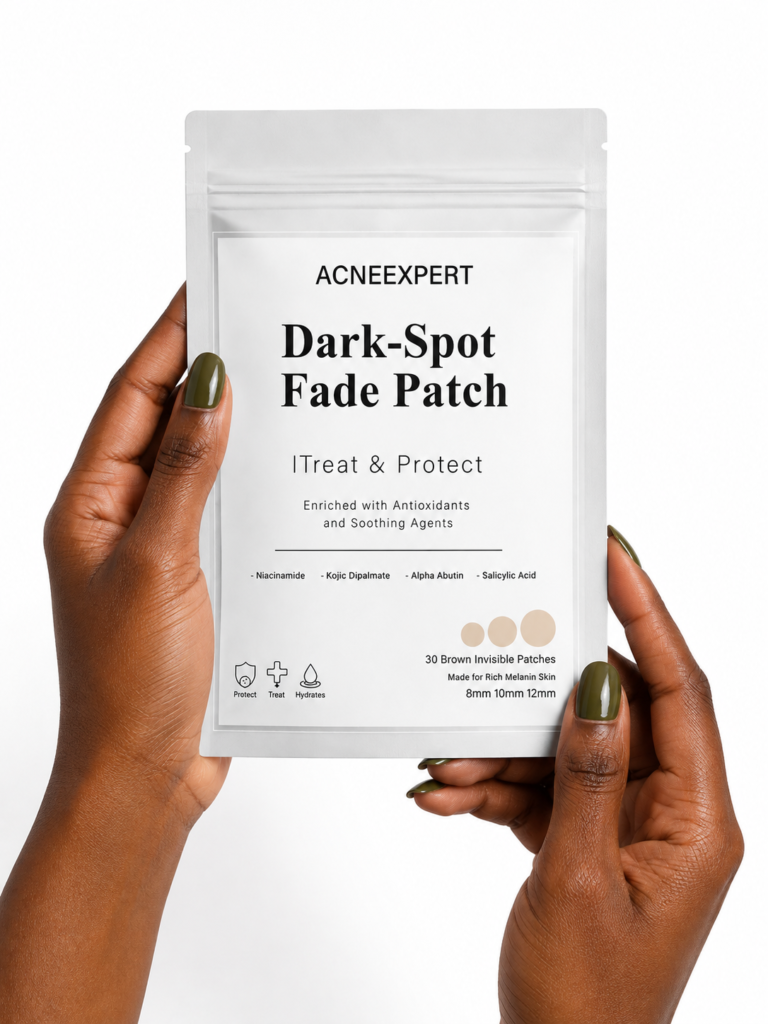
That’s exactly where the Acneexpertskin Dark Spot Fade Patch fits into your routine.
The patch is designed to provide targeted care for the appearance of dark spots rather than requiring you to apply another treatment across your entire face.

Its formula includes:
- Niacinamide
- Kojic Dipalmitate
- Alpha Arbutin
- Salicylic Acid
So instead of adding another complicated step to your entire face, you can focus your attention on the area you’re actually concerned about.
Target the spot. Keep the rest of your routine simple.
And remember, the patch is intended for dark marks, not as a replacement for managing active acne.
So, what should you actually do?
Let’s make this simple.
You don’t need to throw away your entire skincare shelf.
You need a routine you can actually stick to.
Morning
Cleanse
Start with a gentle cleanse appropriate for your skin.
Moisturise
Keep your skin comfortable and hydrated.
Protect
Apply your sunscreen and make it a consistent part of your morning routine.
Evening
Cleanse
Remove the day’s buildup without scrubbing aggressively.
Manage your acne
If you experience regular breakouts, use an acne-focused routine consistently. The AcneExpertSkin Teen Control Cleanser can fit into this part of your routine.
Target your dark spots
For healed dark marks, use targeted care such as the Acneexpertskin Dark Spot Fade Patch according to its product directions.
Moisturise
Finish your routine without piling on unnecessary products.
That’s it.
No twelve-step routine.
No daily scrubbing.
No changing everything every Monday.
Your skin doesn’t need more pressure
When you’re dealing with acne and dark spots, it’s easy to become frustrated.
You start looking at your skin every morning and measuring whether yesterday’s spot looks lighter.
You start comparing your skin to people online.
You start buying more products.
And suddenly, skincare becomes another thing you’re stressed about.
It doesn’t have to be.
Your skin needs consistency, patience and thoughtful care.
Treat the acne.
Don’t pick.
Don’t scrub aggressively.
Don’t overload your routine.
Protect your skin.
Give products time.
And when you have a stubborn dark mark, consider targeted care instead of treating your entire face.
One dark spot doesn’t need to become a skincare crisis
If you’re currently staring at a dark mark left behind by an old breakout, don’t panic.
And don’t immediately reach for the strongest thing you can find.
Start by asking yourself:
Am I still breaking out?
Am I picking my pimples?
Am I irritating my skin?
Am I constantly changing products?
Am I protecting my skin from the sun?
Am I giving my routine enough time?
Those answers may tell you more than another viral skincare product ever will.


