

There’s a particular kind of skincare frustration nobody warns you about.
You finally get rid of the pimple.
The swelling goes down. The redness disappears. Your skin starts looking normal again.
Then you look closely in the mirror…
and there it is.
A dark mark sitting exactly where the pimple used to be.
So now you’re wondering:
“If the acne is gone, why is the mark still here?”
If this sounds familiar, you’re not alone. For many people, especially those with melanin-rich skin, a breakout can leave behind a reminder that lasts much longer than the pimple itself.
The good news?
That dark mark doesn’t necessarily mean you have a permanent scar.

First, let’s clear up one important thing: a dark mark isn’t always an acne scar
When people say “acne scar,” they often mean any mark left behind after a breakout.
But there’s a difference.
A dark, flat mark left after a pimple is often a form of post-inflammatory hyperpigmentation (PIH).
An actual acne scar is usually a change in the texture of the skin… such as a depression, indentation or raised area.
So if your skin feels smooth but you have a brown, black or darker spot where your pimple used to be, you’re likely dealing with pigmentation rather than a traditional scar.
And that’s important because the approach to managing them isn’t exactly the same.
Why does acne leave dark spots?
When you develop acne, your skin experiences inflammation.
Your body’s natural response is to send immune cells to the affected area to deal with the inflammation and begin the healing process.
For melanin-rich skin, that inflammation can also trigger increased melanin production.
And once the pimple heals, the inflammation may be gone…
but the excess pigment can remain.
That’s why you can have a perfectly flat patch of skin where a pimple used to be, yet still have a noticeable dark mark weeks or even months later.
In simple terms:
The pimple healed. Your skin’s pigment response didn’t disappear as quickly.
Why can dark spots be especially frustrating on melanin-rich skin?
Melanin is one of the things that gives your skin its beautiful natural colour and provides some protection from UV radiation.
But when the skin becomes inflamed or injured, increased pigment production can make the resulting marks more noticeable.
This is one reason why the conversation around acne shouldn’t stop at:
“How do I get rid of my pimples?”
It should also include:
“How do I manage the marks my breakouts leave behind?”
Because treating the breakout while constantly irritating your skin can create another cycle of inflammation… and potentially more pigmentation.
So, what can you actually do about acne dark spots?
The first step is to stop treating every dark spot like an emergency.
We understand the temptation.
You see the mark and immediately want the strongest exfoliant, the next viral serum or five different “brightening” products at once.
But more products don’t automatically mean faster results.
In fact, constantly irritating your skin can make the situation harder to manage.
A better approach is to think about three things:
1. Prevent new breakouts
If you’re constantly developing new pimples, you’re constantly creating opportunities for new dark marks.
That’s why acne management and pigmentation management should work together.
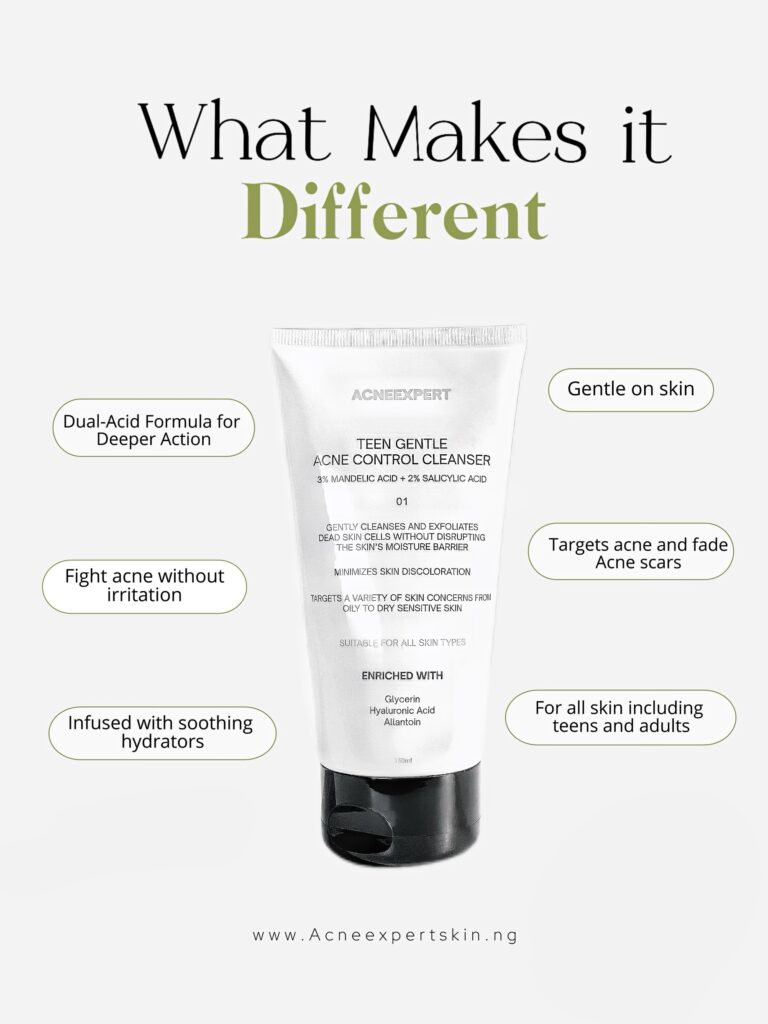
For acne-prone skin, a cleanser formulated with ingredients such as salicylic acid and mandelic acid can be useful as part of a consistent routine.
The Acneexpertskin Teen Control Cleanser, for example, combines these two exfoliating acids to help cleanse acne-prone skin and support a routine focused on breakouts.
The goal isn’t to aggressively strip your skin.
It’s to consistently care for it.
2. Don’t pick at your pimples
We know.
Easier said than done.
But squeezing, scratching or repeatedly touching a breakout can increase inflammation and potentially make the resulting mark more noticeable.
Sometimes the best thing you can do for a pimple is surprisingly simple:
Leave it alone.
Your future skin may thank you.
3. Give existing dark marks targeted care
Once the breakout has healed and you’re left with a stubborn dark mark, you don’t necessarily need to treat your entire face like one giant pigmentation problem.
Sometimes you need a targeted approach.
That’s where the Acneexpertskin Dark Spot Fade Patch comes in.
Meet the Dark Spot Fade Patch
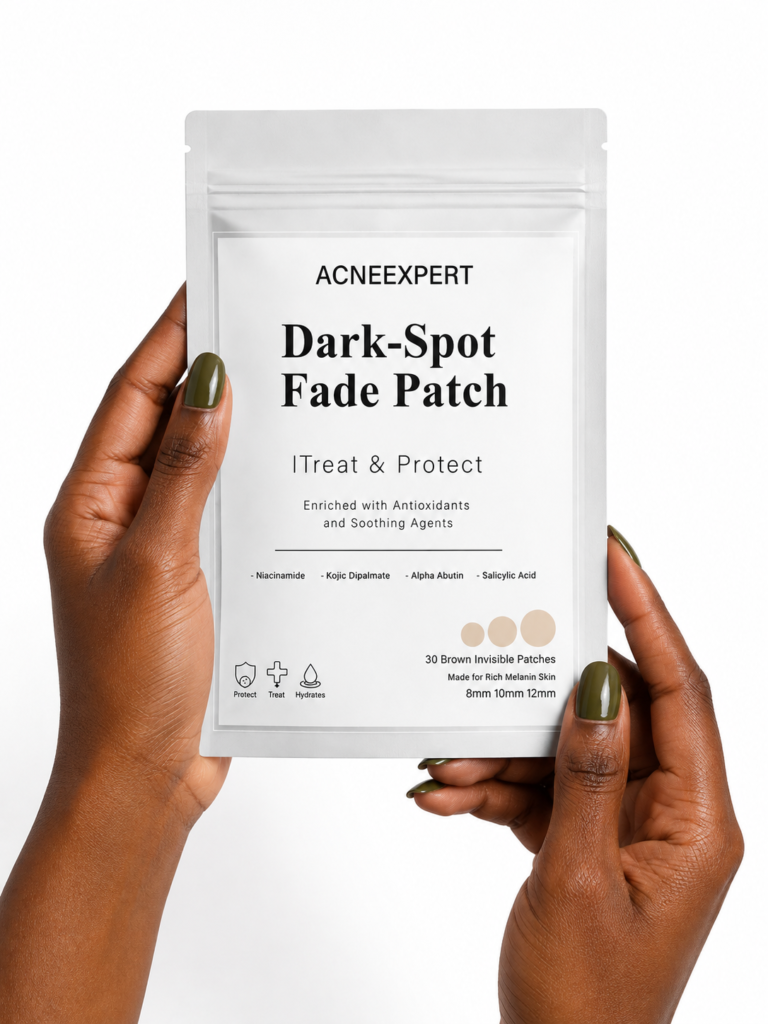
The Dark Spot Fade Patch was created specifically to provide targeted care for the appearance of post-acne dark marks, particularly for melanin-rich skin.
Instead of applying another product across your entire face and hoping it reaches the mark you actually care about, the patch allows you to focus your skincare attention directly on the affected area.
Its formulation includes ingredients such as:
- Niacinamide
- Kojic Dipalmitate
- Alpha Arbutin
- Salicylic Acid
These ingredients are commonly used in skincare routines focused on uneven tone and the appearance of post-acne marks.
And the idea is simple:
You don’t have to treat your whole face just because one spot is bothering you.
Target the spot.
Stay consistent.
Give your skin time.
But don’t expect a dark spot to disappear overnight
This part matters.
Skincare isn’t magic.
A dark mark that took weeks to develop isn’t necessarily going to disappear after one application.
How quickly pigmentation improves can vary depending on factors such as:
- the depth and severity of the pigmentation
- your skin type
- how long you’ve had the mark
- continued breakouts
- sun exposure
- irritation
- your overall skincare routine
Consistency matters more than constantly switching products.
And if you’re using a targeted treatment, give it enough time to do its job.
What about sunscreen?
If you’re serious about managing dark spots, sun protection deserves a place in the conversation.
UV exposure can contribute to pigmentation and can make existing dark marks harder to manage.
So even when you’re focusing on treating a dark spot, don’t forget the bigger picture:
Protect your skin while you’re caring for it.
Your routine shouldn’t only focus on fading what has already happened.
It should also help prevent the cycle from continuing.
Think beyond the dark spot
Here’s the bigger lesson:
If you’re constantly treating dark spots but ignoring the breakouts causing them, you’re fighting only half the battle.
Imagine your skincare journey as a cycle:
Breakout → inflammation → dark mark → fading → new breakout → new dark mark
The goal isn’t simply to get better at treating the marks.
It’s to gradually interrupt the cycle.
That means:
Manage breakouts.
Avoid unnecessary irritation.
Care for existing marks.
Protect your skin.
Stay consistent.
That’s a much more sustainable approach than chasing every new skincare trend that promises overnight results.
Your skin doesn’t need punishment. It needs a plan.
If you’re currently dealing with a dark mark after a breakout, don’t panic.
And definitely don’t start attacking your skin with every brightening product you can find.
Start with understanding what you’re dealing with.
If it’s a flat dark mark left behind after acne, you’re likely dealing with post-inflammatory hyperpigmentation rather than a traditional acne scar.
From there, focus on a consistent routine that addresses both current breakouts and existing marks.
For existing dark marks, the Acneexpertskin Dark Spot Fade Patch gives you a convenient way to provide targeted care exactly where you need it.
And for acne-prone skin, a consistent cleanser such as the Acneexpertskin Teen Control Cleanser can form part of a routine focused on managing breakouts before they have the opportunity to leave behind another mark.
Because the goal isn’t simply:
“Get rid of this spot.”
It’s:
“Help my skin become healthier, more balanced and easier to care for.”
And that’s a much better skincare goal.
Frequently Asked Questions
How long does an acne dark spot take to fade?
It varies from person to person. Some marks may improve within weeks, while others can take considerably longer. Consistency, sun protection and avoiding further irritation can all be important.
Are dark spots the same as acne scars?
Not necessarily. Flat areas of darker pigmentation are often post-inflammatory hyperpigmentation, while acne scars generally involve a change in skin texture, such as indentations or raised areas.
Can I use the Dark Spot Fade Patch on active acne?
The Dark Spot Fade Patch is designed for dark marks, not as a replacement for acne treatment. It’s important to distinguish between an active breakout and a healed spot that has left pigmentation behind.
Why do my pimples keep leaving dark marks?
Inflammation from acne can trigger increased melanin production, particularly in melanin-rich skin. Picking or irritating the breakout can also make inflammation worse.
Should I stop using all my other skincare products when using a dark spot patch?
Not necessarily. The important thing is to avoid creating an overly aggressive routine. Introduce products thoughtfully and follow their specific usage instructions.
The Takeaway
Your acne disappearing doesn’t always mean the story is over.
Sometimes the breakout leaves behind a dark mark that needs its own kind of care.
Understanding the difference between acne, acne scars and post-inflammatory hyperpigmentation is the first step.
Then comes the boring—but powerful—part:
consistency.
Care for the breakouts.
Don’t pick.
Don’t over-irritate your skin.
Protect it.
And when a stubborn dark mark remains, consider targeted care rather than attacking your entire face.
Because one spot shouldn’t have to take over your whole skincare routine.


