

For many people, dark spots feel like a mystery.
The acne is gone, the wound has healed, the breakout has disappeared, yet the marks remain. Weeks turn into months, and despite trying countless home remedies and trending skincare products, those stubborn spots refuse to fade.
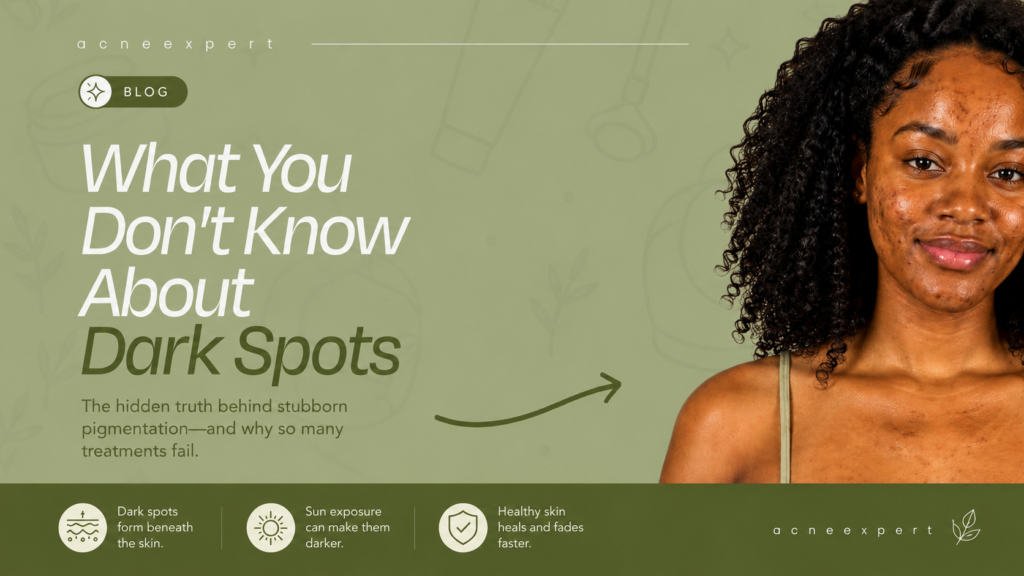
What most people don’t realize is that dark spots aren’t simply “stains” sitting on the surface of your skin. They’re the result of a complex biological response happening beneath the skin’s surface.
Understanding why they happen is the first step toward treating them effectively.
Dark Spots Are Your Skin’s Memory
Every time your skin experiences inflammation, whether from acne, eczema, insect bites, burns, harsh skincare products, or even excessive scratching, it goes into repair mode.
As part of this healing process, specialized skin cells called melanocytes produce melanin, the pigment responsible for your skin tone.
Sometimes, these cells produce more melanin than necessary.
Instead of fading away after the injury heals, the excess pigment remains in the affected area, leaving behind what we commonly call dark spots or post-inflammatory hyperpigmentation (PIH).
In simple terms:
The injury may have healed, but your skin remembers it.
Not Every Dark Spot Is Caused by Acne
One of the biggest misconceptions is believing acne is the only culprit.
In reality, dark spots can develop after:
- Acne breakouts
- Pimples that were picked or squeezed
- Insect bites
- Razor bumps
- Cuts and scrapes
- Burns
- Allergic skin reactions
- Harsh chemical products
- Friction from tight clothing
- Skin irritation from excessive exfoliation
Any inflammation has the potential to leave pigmentation behind.
Why Some People Get More Dark Spots Than Others
Have you ever noticed two people experience similar acne, yet one develops severe dark marks while the other doesn’t?
That’s because several factors influence pigmentation.
These include:
1. Skin Tone
People with medium to deep skin tones naturally have more active melanocytes.
This doesn’t mean their skin is unhealthy.
It simply means their skin responds to inflammation by producing more pigment, making dark spots more noticeable.
2. Picking Your Skin
Every time you squeeze a pimple or scratch an irritated area, you’re creating additional inflammation.
More inflammation means more pigment production.
This often leads to darker spots that take even longer to fade.
3. Sun Exposure
Ultraviolet (UV) rays stimulate melanin production.
Even after a dark spot has formed, regular sun exposure can make it darker, more stubborn, and slower to disappear.
This is one reason sunscreen plays such an important role in managing hyperpigmentation.
4. Using the Wrong Products
Some products promise fast results but end up irritating the skin.
Instead of reducing pigmentation, they increase inflammation, creating a cycle where new dark spots continue to appear.
Healthy skin heals better than irritated skin.
The Biggest Mistake People Make
The biggest mistake isn’t having dark spots.
It’s constantly switching between products.
Every viral skincare trend promises overnight transformation.
People buy one product this week, another next month, then try DIY remedies the following week.
The result?
The skin never gets enough time to respond to a consistent routine.
Healthy skin thrives on patience and consistency, not constant experimentation.
There’s More to Dark Spot Treatment Than Most People Think
For years, many people have believed treating dark spots simply means applying a cream and waiting.
But the truth is far more interesting.
The effectiveness of any treatment depends on understanding:
- Why the pigmentation formed
- How deep it is
- What’s keeping it from fading
- Whether your skin barrier is healthy enough to recover
- Whether you’re unknowingly making the pigmentation worse
These are questions many skincare routines overlook.
And that’s exactly why so many people feel frustrated despite trying product after product.
At Acneexpertskin, we’ve spent time studying these challenges because we believe dark spot care deserves more than quick fixes and empty promises.
We’re working on something designed with these realities in mind, and over the coming weeks, we’ll be sharing more insights into what truly makes a difference in treating stubborn pigmentation.
For now, one thing is certain:
When you understand your skin, you make better decisions for it.
| MYTHS | TRUTHS |
|---|---|
| Dark spots are permanent. | Most dark spots can fade significantly with the right approach, consistency, and proper skin care. |
| Only acne causes dark spots. | Any form of skin inflammation—including insect bites, burns, eczema, shaving bumps, or irritation—can leave pigmentation behind. |
| Scrubbing your skin harder removes dark spots faster. | Excessive scrubbing often causes more irritation, which can make pigmentation worse instead of better. |
| Natural remedies always work because they’re natural. | Natural ingredients aren’t automatically safe or effective. Some may even irritate the skin and worsen pigmentation. |
| If a product stings, it means it’s working. | Persistent burning or irritation often signals skin barrier damage, not better results. Healthy skin heals more effectively. |
| Dark spots should disappear within a few weeks. | Skin renewal takes time. Depending on the severity, pigmentation can take several weeks to several months to improve. |
| Once the spot fades, you don’t need sunscreen anymore. | Daily sun protection helps prevent existing spots from becoming darker and reduces the risk of new pigmentation forming. |
| Using more products means faster results. | A simple, consistent routine is usually more effective than constantly layering or changing multiple products. |


