

Have you been treating what you thought was a dark spot for weeks, or even months, without seeing much improvement?
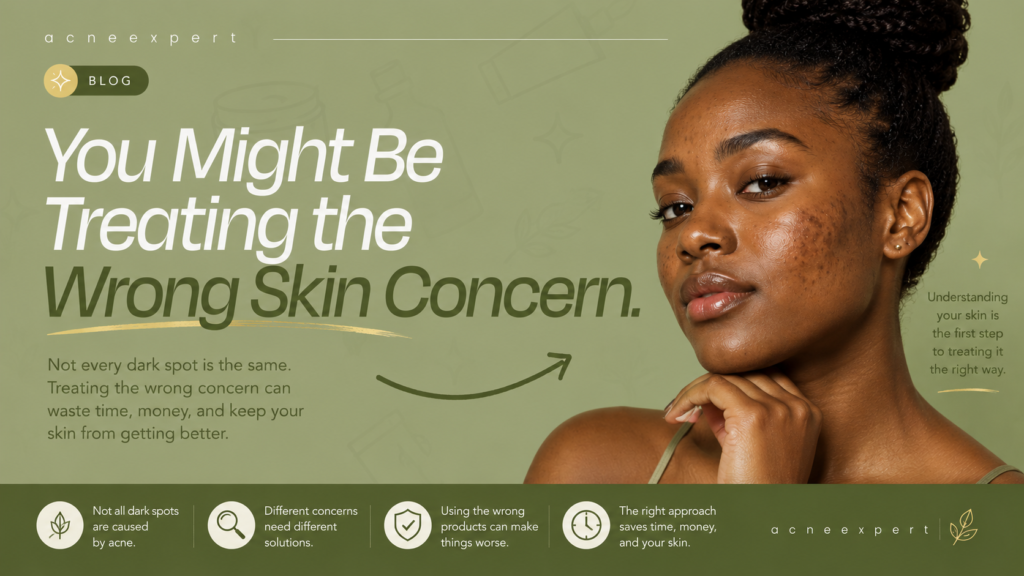
The problem may not be your skincare routine. It could be that the mark you’re trying to treat isn’t actually a dark spot.
Many skin concerns can look alike at first glance, but they have different causes and require different approaches. Knowing what you’re dealing with is the first step to choosing the right solution.
Let’s look at some of the most common skin concerns that people mistake for dark spots.
1. Acne Scars
Acne scars and dark spots are often confused, but they are not the same thing.
Dark spots are changes in skin colour that occur after inflammation, while acne scars are changes in the skin’s texture. If a mark feels raised or indented when you run your fingers over it, you’re most likely dealing with a scar rather than pigmentation.
Texture concerns and pigment concerns don’t respond to the same treatments, which is why it’s important to know the difference.
2. Melasma
Melasma appears as brown or greyish patches, usually on the cheeks, forehead, nose, or upper lip.
Unlike post-acne dark spots, melasma is commonly linked to hormones, pregnancy, genetics, and sun exposure. It often appears in symmetrical patches instead of individual marks left behind by breakouts.
Because the causes are different, treatment is different too.
3. Freckles
Freckles are natural pigment spots that many people inherit or develop after spending time in the sun.
They’re harmless and aren’t caused by acne or skin injury. While some people love their freckles, others mistake them for dark spots and use products that aren’t intended for them.
4. Active Pimples
A red or inflamed pimple can sometimes appear darker than the surrounding skin, making it easy to mistake for a dark spot.
The truth is, it’s still an active breakout. Treating pigmentation before the inflammation has settled won’t give you the results you’re looking for.
5. Sun Spots
Sun spots, sometimes called age spots, develop after years of exposure to ultraviolet (UV) rays.
They’re most common on areas that receive frequent sunlight, such as the face, hands, shoulders, and chest. Unlike post-acne dark spots, they develop gradually over time and aren’t linked to breakouts.
Daily sun protection is one of the best ways to prevent them from becoming more noticeable.
6. Moles
Some flat moles can easily be mistaken for dark spots, especially if they’re small.
Moles are usually stable in colour and shape. If you ever notice one changing quickly in size, colour, or border, it’s important to have it assessed by a healthcare professional.
Why Getting the Right Diagnosis Matters
One of the biggest mistakes people make is assuming every dark mark needs the same solution.
When you treat the wrong skin concern, you may end up spending money on products that were never designed for the problem you’re trying to solve. That’s why understanding your skin should always come before building a skincare routine.
At Acneexpertskin, we believe skincare should start with education. The more you understand your skin, the more confident you’ll be in making the right choices.
In fact, that’s exactly what’s been keeping us busy lately.
If dark spots have been holding you back, we think you’ll be excited about what’s coming.
For now, keep learning with us. Your skin deserves informed care, not guesswork.
Frequently Asked Questions
1. How do I know if I have a dark spot or a scar?
Dark spots are flat because they’re caused by excess pigment in the skin. Scars, however, change the skin’s texture and may feel raised or indented. If you can both see and feel the difference, it’s likely a scar rather than a dark spot.
2. Can every dark mark be treated the same way?
No. Melasma, freckles, sun spots, acne scars, and post-acne dark spots all have different causes. Using the wrong treatment may not give you the results you’re expecting.
3. Why are my dark spots taking so long to fade?
Dark spots fade at different rates depending on your skin tone, sun exposure, whether you’re still experiencing breakouts, and how consistent you are with your skincare routine. Picking at pimples can also make them last much longer.
4. Can dark spots come back after they’ve faded?
Yes. If new acne develops, if your skin isn’t protected from the sun, or if the underlying cause isn’t addressed, new dark spots can appear even after older ones have faded.
5. When should I see a dermatologist?
If a mark changes rapidly in colour, size, or shape, becomes painful, bleeds, or you’re unsure what it is, it’s always best to seek advice from a qualified dermatologist or healthcare professional.
6. Where can I learn more about dark spots and acne-prone skin?
Keep following Acneexpertskin. We’ll continue sharing practical skincare education, busting common myths, and helping you understand your skin.


